The SOC Is Where Cybersecurity Gets Real. Here’s How TCSA Puts You There.
You’ve probably seen the headlines. A major hospital’s systems go offline. A bank loses millions in a single overnight attack. A government agency discovers an intruder who’s been quietly reading classified files for months.
In each of these cases, there was — or should have been — a team working to prevent it. That team operates out of a Security Operations Center, and the professionals who staff it are among the most important people in modern cybersecurity.
The Texial Certified SOC Analyst (TCSA) program prepares you to become one of them.
What a SOC Actually Does
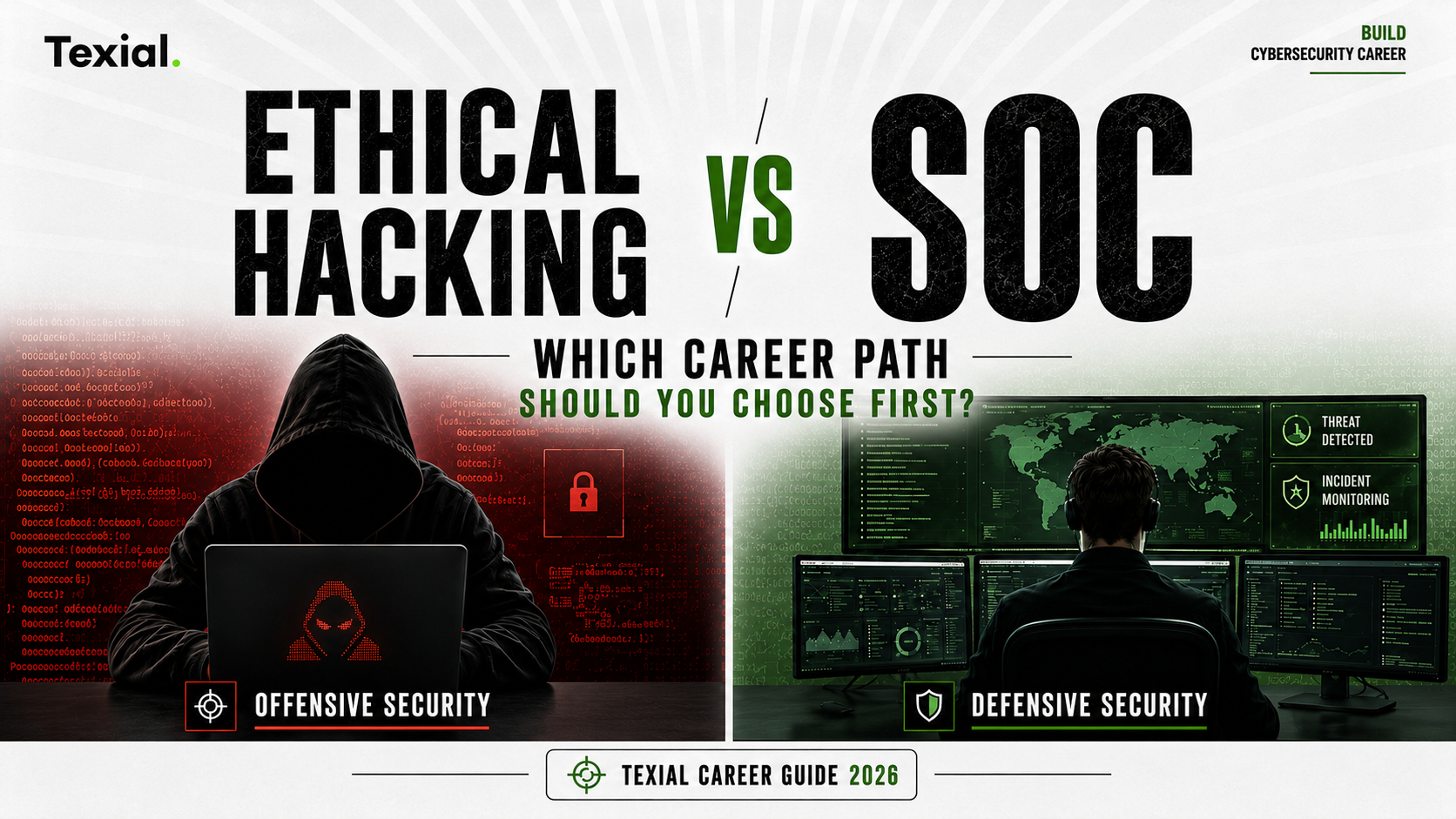
A Security Operations Center is the nerve center of an organization’s digital defense. Analysts there monitor network traffic, respond to alerts, investigate anomalies, and coordinate when things go wrong. The work is fast, real-time, and consequential.
But here’s what most training programs miss: being effective in a SOC isn’t just about watching dashboards. It requires the ability to read a situation quickly, separate genuine threats from noise, and respond in a way that limits damage and restores normalcy.
TCSA teaches both the technical skills and the operational judgment that real SOC work demands. Learn More
What the TCSA Curriculum Covers
SIEM Operations: Security Information and Event Management platforms are the backbone of modern SOC work. You’ll learn not just how to read them, but how to configure them — turning raw log data into actionable intelligence.
Proactive Threat Hunting: Waiting for alerts to fire means you’re already behind. TCSA trains you to actively search for indicators of compromise that haven’t triggered any alarms yet. It’s a fundamentally different mindset — and a far more effective one.
Incident Response: When a breach happens, the response in the first few hours determines how bad the damage gets. You’ll master the full lifecycle — detection, containment, eradication, recovery, and post-incident review.
SOAR (Security Orchestration, Automation & Response): In high-volume environments, manual response doesn’t scale. TCSA teaches you to build and leverage automated playbooks so you can focus your attention where human judgment is actually needed.
Network Forensics & Traffic Analysis: Understanding how attackers moved through a network — what they accessed, what paths they took, what they left behind — is essential for both incident response and future prevention. You’ll develop this analytical capability in live lab environments.
Where a TCSA Credential Takes You
SOC Analyst (Tier 1 & Tier 2): The foundational role. You’re the first responder — monitoring, triaging, and escalating alerts around the clock. Tier 2 builds on this with deeper investigation and more complex case handling.
Incident Responder: A specialized role focused entirely on crisis management. When the alarm sounds, you lead the response. The combination of speed and precision this requires is exactly what TCSA trains you for.
Threat Intelligence Analyst: You focus on understanding adversaries — who they are, what their motivations are, how they operate, and how your organization can anticipate their next move.
SIEM Engineer: A more technical path focused on building, tuning, and optimizing the monitoring infrastructure itself. Strong demand, strong salaries, and a direct pipeline from TCSA skills.
Security Operations Manager: With experience, the SOC career path leads to leadership — managing analysts, setting procedures, and ensuring the operation is running at the level the organization needs.
Why This Matters Right Now
The global shortage of cybersecurity professionals is not a hypothetical — it’s affecting real organizations that are trying to protect real systems. And the demand is sharpest in exactly the defensive, operational roles that TCSA prepares you for.
AI is changing a lot of things about how organizations operate, but it hasn’t replaced SOC analysts — and here’s why it won’t anytime soon. A tool can flag unusual behavior. It takes a trained analyst to understand whether that behavior is an actual attack, a misconfiguration, an insider threat, or a false positive — and to respond accordingly. Human judgment is the essential ingredient that makes a SOC actually work.
Who Should Enroll in TCSA?
Ambitious graduates who want to enter cybersecurity in a specialized, high-impact role rather than spending years in general IT support.
Network and systems administrators who want to apply their existing infrastructure knowledge to active security defense — a natural and well-paying career transition.
VAPT professionals who want to understand the other side of the equation. Knowing how to attack and defend is what separates the most effective security professionals.
Career changers who bring a sharp, analytical mind and a genuine interest in how systems work. The technical foundation is something we build together — you bring the mindset.
Your Next Step
The organizations protecting the world’s data need people who know how to defend it. Not someday — right now.
If you’re ready to step into one of the most in-demand roles in the industry, let’s talk about how TCSA fits into your career plan.